What to expect at the Skeleton Coast
Sara • 03/26/2026
SHARE
Few places on Earth feel as remote, raw, and hauntingly beautiful as the Skeleton Coast. Stretching along Namibia’s northwestern shoreline, this stark meeting point of desert and ocean is a place of shipwrecks, shifting sands, and extraordinary resilience. For travellers seeking something beyond the predictable safari, the Skeleton Coast offers a deeply atmospheric, almost otherworldly experience—especially when explored in tandem with the remote Hoanib River region.
The Skeleton Coast: Where the Desert Meets the Sea
The name alone evokes intrigue. The Skeleton Coast earned its reputation from the whale bones and shipwrecks that once littered its shores—victims of thick fog, unpredictable currents, and inhospitable terrain. Today, these remnants still punctuate the coastline, adding to its cinematic, desolate beauty.
Expect vast, windswept beaches where the Atlantic crashes against towering dunes. The fog, rolling in from the cold Benguela Current, creates an eerie, almost dreamlike atmosphere. It’s not uncommon to feel as though you’ve stepped into a different era entirely—one untouched by time.
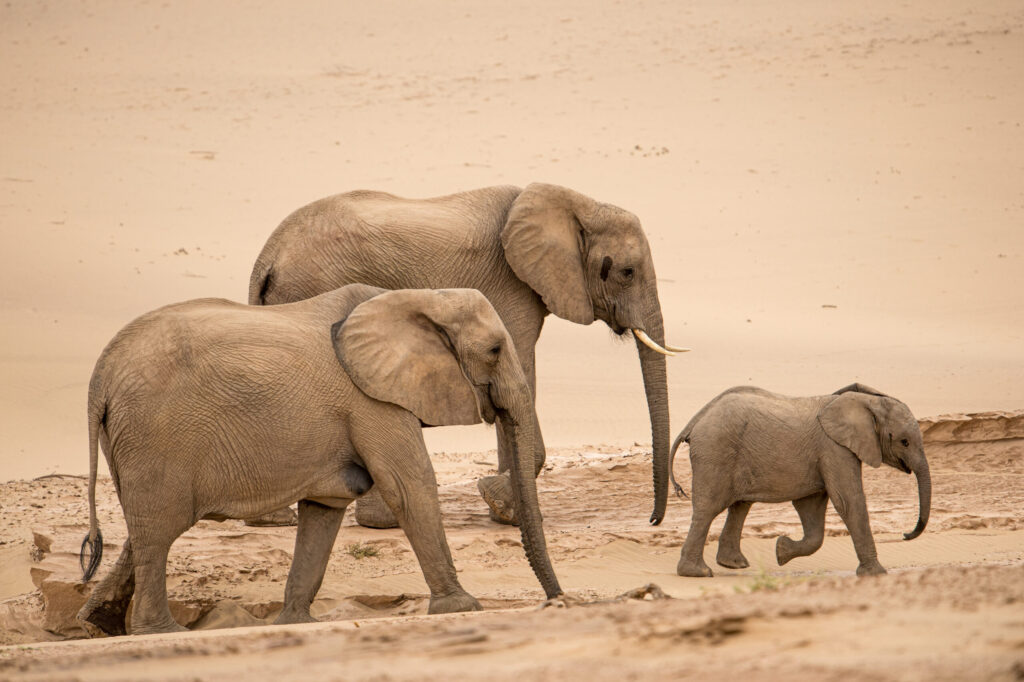
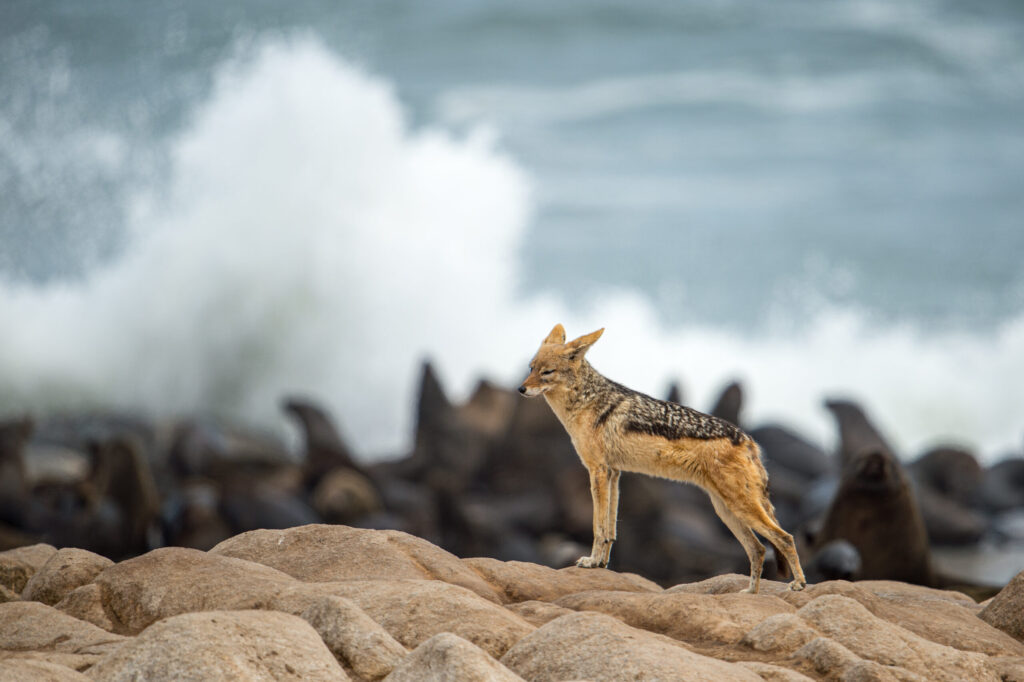
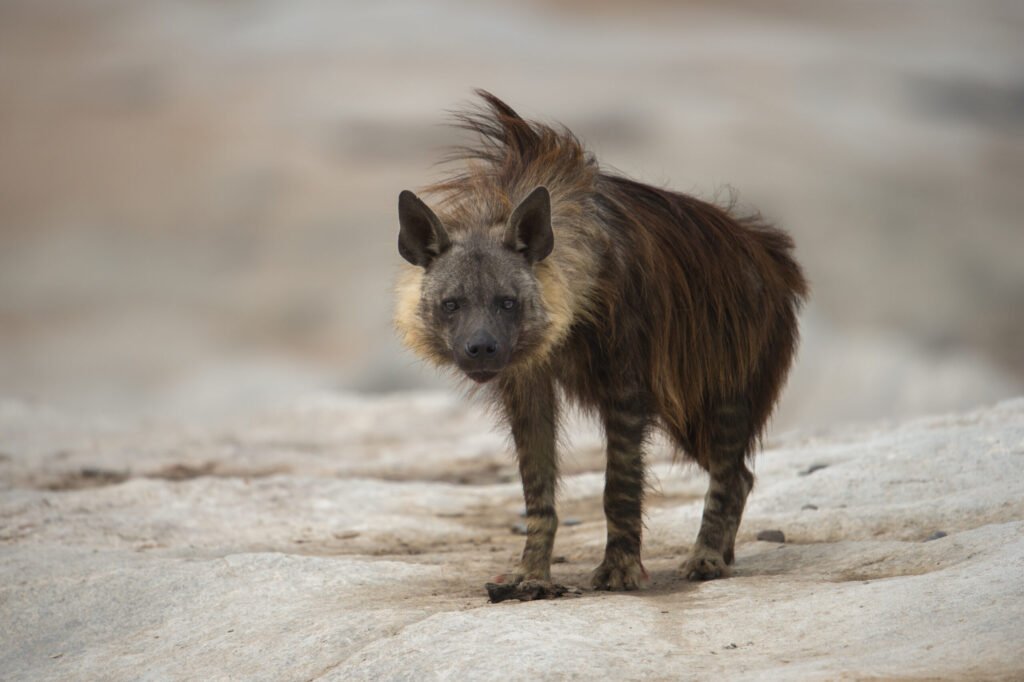
Wildlife here is subtle but remarkable. Desert-adapted elephants, brown hyenas, and even lions have learned to survive in this harsh environment. Birdlife thrives along the coast, and seals gather in large colonies, particularly near places like Cape Cross Seal Reserve.
Into the Wilderness: The Hoanib River
Moving inland, the dry riverbeds of the Hoanib River cut through dramatic desert landscapes. For much of the year, the Hoanib is a sandy ribbon winding through mountains and gravel plains—but after rains, it can transform into a flowing lifeline.
This region is one of Namibia’s best-kept secrets. It offers a quieter, more intimate safari experience compared to traditional parks. Here, wildlife is not concentrated around permanent water sources, so tracking becomes part of the adventure.