
Rutt a Tut Tutt
Sara • 04/24/2026
SHARE

Impalas are one of the most common antelope species in the South African bushveld, especially in iconic safari destinations like Kruger National Park. Their abundance is no accident — it’s the result of highly effective breeding behaviour, adaptability, and survival strategies.
As winter settles across the southern hemisphere, the impala rutting season begins. During this time, testosterone levels surge in impala rams, triggering intense competition for dominance. Strong males fight aggressively, chasing rivals away and forcing them into bachelor herds — a common sight on any African safari.
The impala rut is one of the most dramatic wildlife spectacles in Africa. It’s loud, chaotic, and relentless — filled with snorting, roaring, and constant movement as males compete for breeding rights.
Once a dominant ram establishes control, he gathers and guards a herd of females, mating with as many as possible to pass on his genes. Interestingly, he typically won’t mate with the same female twice, maximising genetic diversity within the herd.
But dominance comes at a cost. During the peak of the rut, the leading male is so focused on mating and defending territory that he barely eats or rests. As a result:
- His body condition deteriorates rapidly
- Tick infestations increase significantly
- Energy reserves are depleted
This intense period of reproductive effort often leaves the dominant ram physically exhausted and vulnerable. This is when predators like lion and leopard are on the look out as the rams are often caught off guard. The biggest predator of Impalas is in fact the Wild Dog:
African wild dogs primarily prey on impala, and a single pack can hunt and kill multiple individuals in a day. As highly efficient coursing predators, they chase their prey over long distances, often splitting impala herds in the process.
This behaviour has an important ecological impact:
- It disperses impala populations across wider areas
- It mixes genetic pools between different herds
- It strengthens overall herd resilience
By forcing movement and selection pressure, wild dogs contribute directly to the “survival of the fittest” in the African bush.
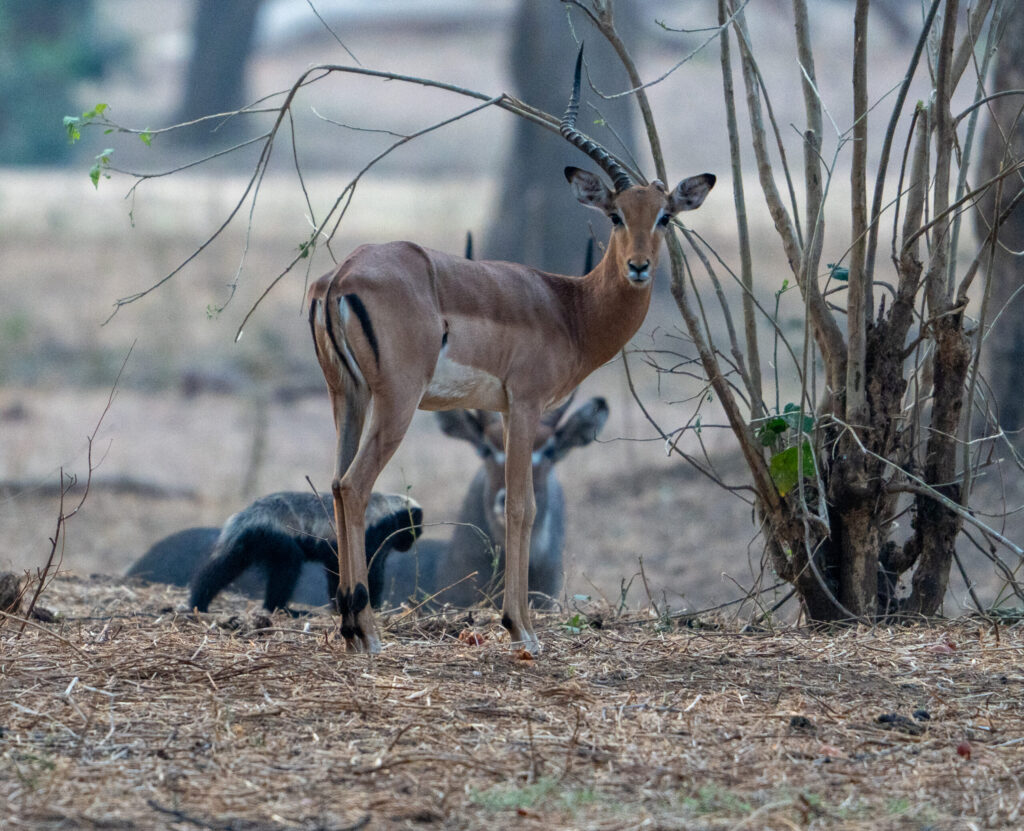
Impalas may be common in the bush, but they have a beautiful coat and seeing one is almost a symbol of entering the Southern African bush.