
Smart strategies wild dogs use to hunt
Sara • 05/07/2026
SHARE
Many people assume that lions or leopards have the most successful hunting rate. It is, in fact, the clever pack of painted wolves that win this honor.
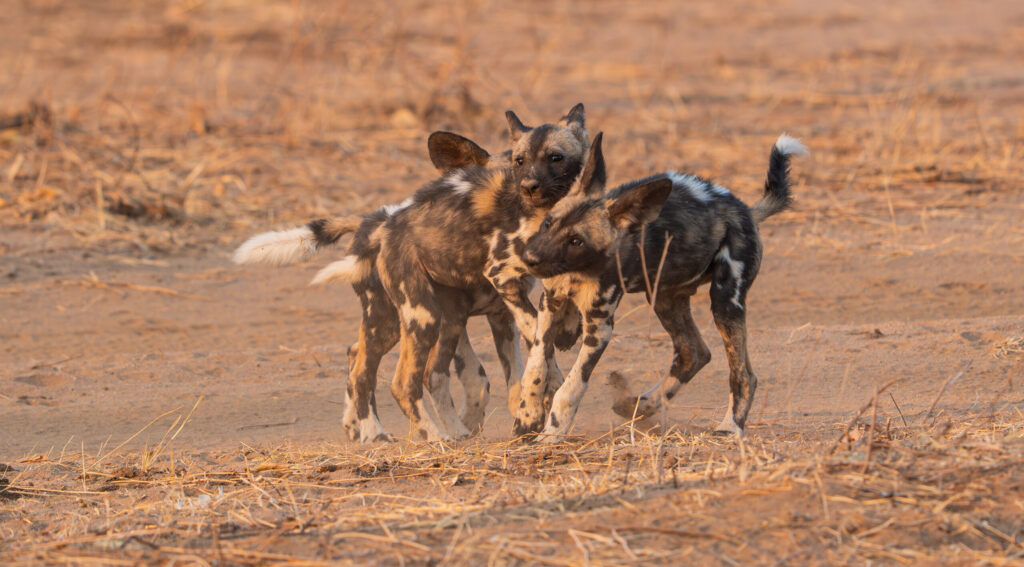
Known as the most successful hunters in Africa, African wild dogs have an astonishing hunting success rate of nearly 80%, outperforming lions, leopards, and hyenas. Their incredible teamwork, endurance and intelligence make them highly efficient predators. Unlike ambush hunters, wild dogs rely on stamina and coordinated pack tactics, chasing prey over long distances at speeds of up to 60 km/h. During these high-speed pursuits, weaker animals begin to fall behind, making them vulnerable to the pack. Once a kill is made, the dogs can consume it remarkably quickly — often within just 10 to 15 minutes.
When Richard worked as a guide at Sabi Sabi, he wrote a number of blogs. We have been re-reading them and thought you might be interested to hear these stories. Time may have passed, but the stories still stand.
“Over the last few weeks, we’ve been incredibly fortunate to witness one of Africa’s rarest and most fascinating predators on our reserve — the endangered African wild dog. With the pack recently moving their den into the area, we thought it was the perfect opportunity to share more about these extraordinary animals and why every sighting is so special on an African safari.
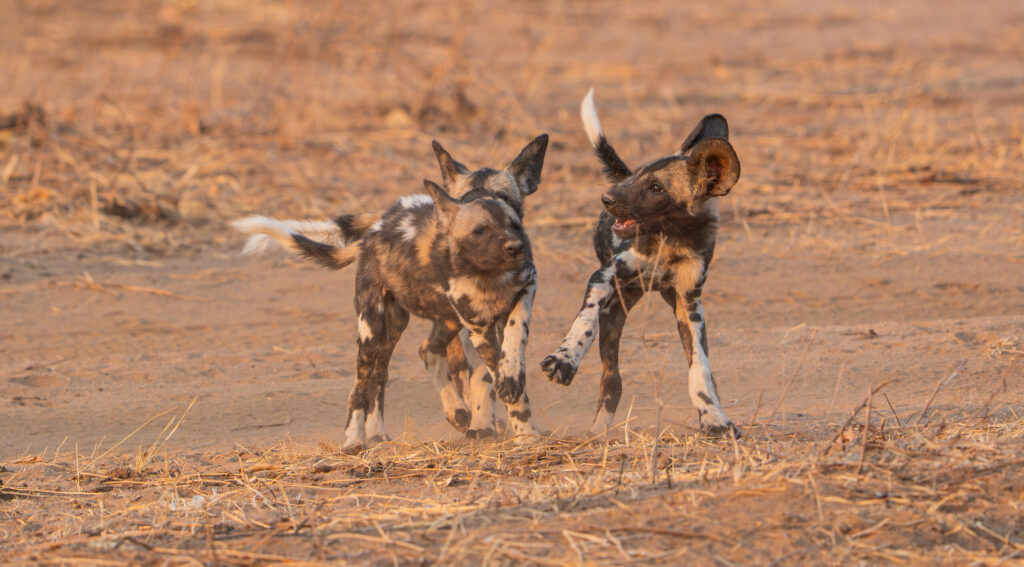
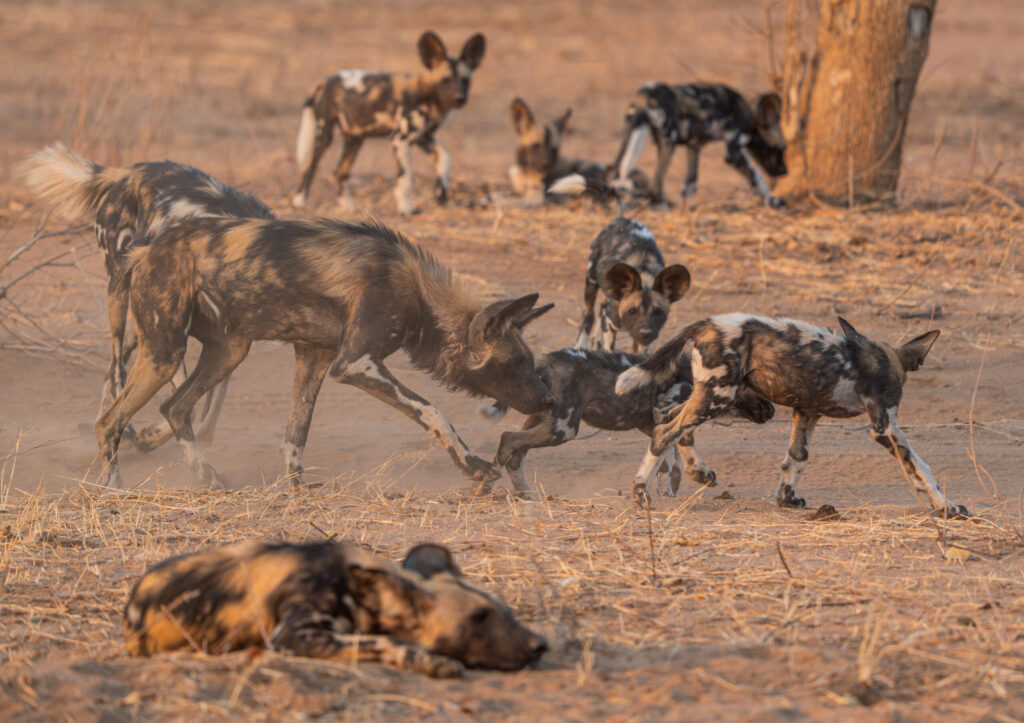
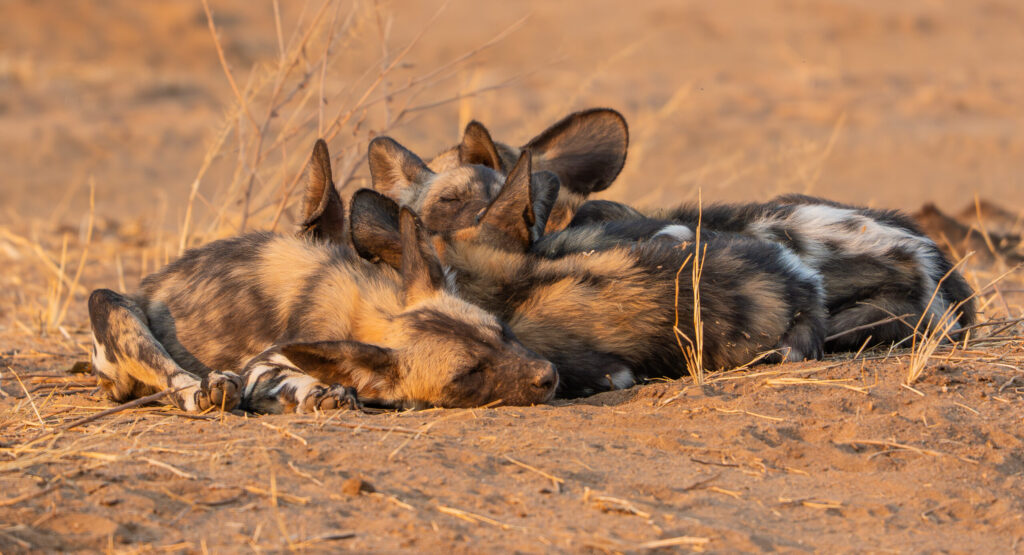
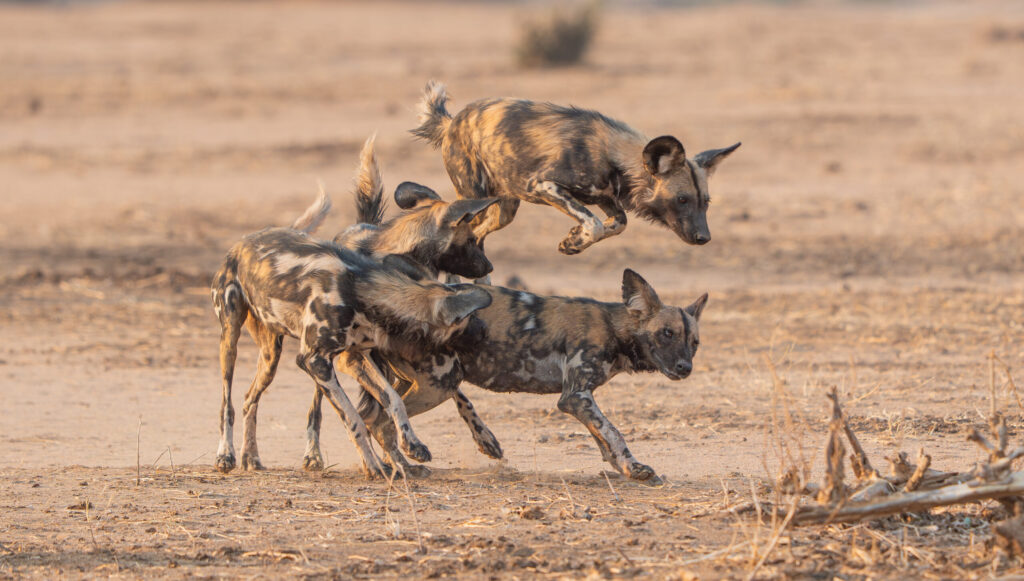
The African wild dog, also known as the painted wolf or Cape hunting dog, is listed as highly endangered and is considered the second most endangered mammal in Africa. Current estimates suggest that fewer than 5,000 African wild dogs remain in the wild, with as few as 300 roaming the vast wilderness of Kruger National Park. Considering that Kruger National Park spans more than 5 million hectares, spotting these elusive predators on safari is an exceptionally rare wildlife experience.
African wild dogs require enormous territories to survive, with pack home ranges stretching anywhere between 200 and 1,000 square kilometres. This need for space is one of the greatest challenges facing wild dog conservation in Africa today.
Each pack is led by an alpha male and female, who are typically the primary breeding pair. Litters can contain as many as 20 pups, although survival rates are often low due to threats from lions, leopards and hyenas. During denning season, the pack remains close to the den site, hunting nearby before returning to regurgitate food for the pups and the adults guarding the den. To reduce parasite buildup, the den must be relocated occasionally.
Conservationists across Africa are working tirelessly to protect African wild dogs from extinction, but safeguarding the species is incredibly complex. Their large territorial requirements and high food consumption — sometimes up to three impala per day for a pack — mean that only very large protected reserves can sustain healthy populations. Habitat fragmentation, human-wildlife conflict and shrinking wilderness areas continue to threaten their future.
Every African wild dog sighting is a reminder of how precious and fragile Africa’s wilderness truly is. By expanding protected reserves and supporting wildlife conservation efforts, there is hope that future generations will continue to experience the thrill of seeing these endangered predators in the wild.”